


 Dodge2 in stock
 Jeep10 in stock
 Nissan26 in stock
 Ram17 in stock
 Chevrolet1 in stock
 Chrysler2 in stock
 Ford6 in stock
 GMC1 in stock
 Mazda1 in stock
 Toyota1 in stock
Jeep Wrangler: 2.0L Turbo 4-Cylinder vs. 3.6L V6 Engine Comparison
Updated October 9, 2026 · Horne Nissan & Horne Chrysler Dodge Jeep Ram, Globe, AZ
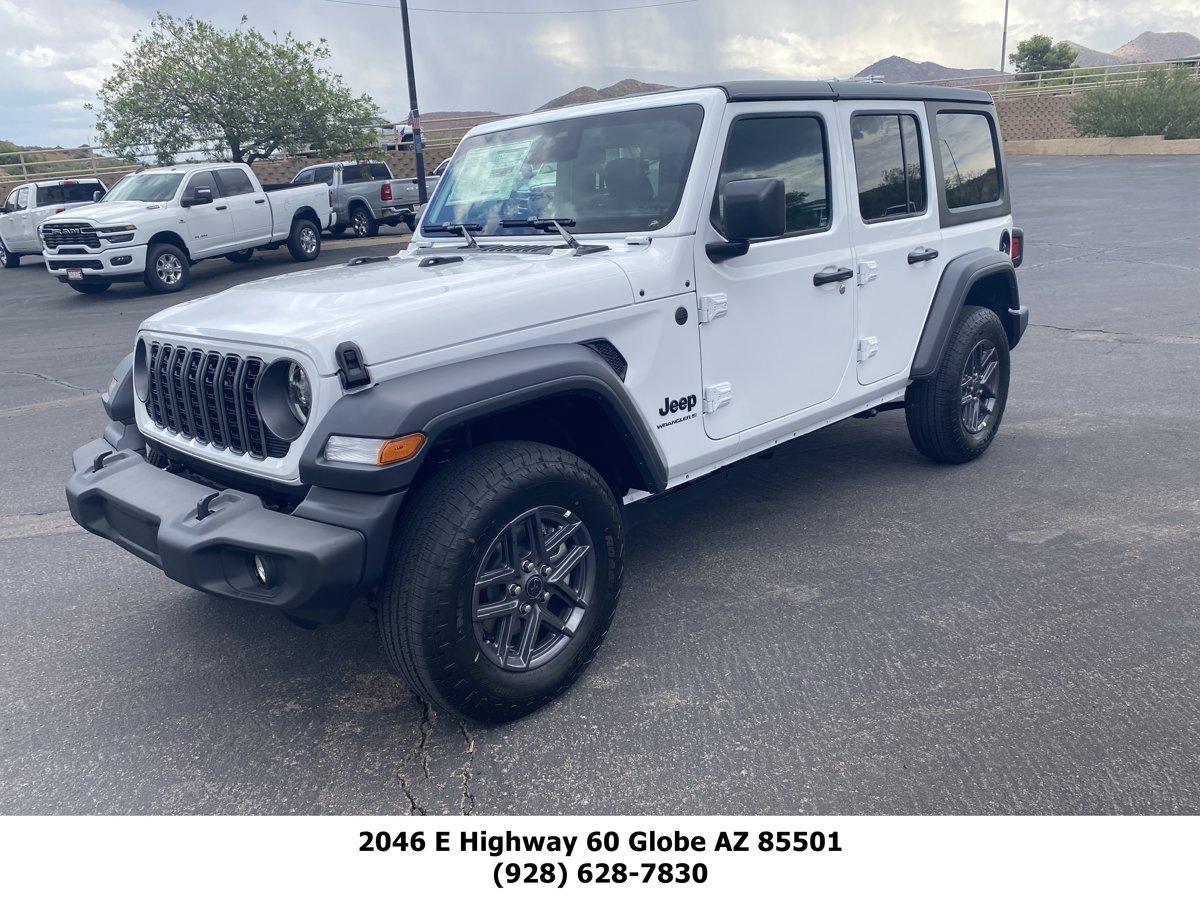
Choosing between the Jeep Wrangler's 2.0L turbo 4-cylinder and the 3.6L V6 engine often comes down to personal driving style and priorities. While the 2.0L turbo offers a responsive feel with premium fuel, the 3.6L V6 provides reliable power with regular fuel, making both excellent choices depending on your needs.
Engine Overview: 2.0L Turbo 4-Cylinder
The 2.0L turbo 4-cylinder engine in the Jeep Wrangler is designed for efficiency and a lively driving experience. This engine, found in several of our new and used Wranglers, delivers 270 hp and is known for its quick response, especially in low-end acceleration. It requires premium fuel, which is an important consideration for your running costs. For instance, a new 2026 Jeep Wrangler Sport S with this engine has an EPA estimated annual fuel cost of $3,200. Used 2023 and 2022 models with the same engine have an EPA estimated annual fuel cost of $2,900, reflecting their slightly different MPG ratings.
This engine is well-suited for both city driving and off-road adventures, providing ample torque for navigating rugged terrain. Its turbocharged nature means power is readily available, which can be particularly advantageous when climbing or accelerating on the highway.
Engine Overview: 3.6L V6
The 3.6L V6 engine is a classic choice for the Jeep Wrangler, known for its proven reliability and smooth power delivery. This engine produces 285 hp, offering a robust feel that many traditional Jeep enthusiasts appreciate. A key advantage of the 3.6L V6 is its use of regular fuel, potentially leading to lower fuel costs compared to the premium fuel required by the 2.0L turbo. For example, a used 2024 Jeep Wrangler Sport S with the 3.6L V6 has an EPA estimated annual fuel cost of $2,900.
This engine excels in a variety of situations, from daily commutes to challenging off-road trails. Its naturally aspirated design provides a linear power band, making it predictable and easy to manage in diverse driving conditions. It's a workhorse engine that has powered countless Wranglers through countless adventures.
Low-End Feel, Trail, and Highway Use
When it comes to the feel of these engines, the 2.0L turbo 4-cylinder typically offers a more immediate, punchy low-end feel due to the turbocharger spooling up quickly. This can be beneficial for quick acceleration from a stop or when navigating technical trails where instant torque is needed. On the highway, the turbo engine maintains good passing power.
On the other hand, the 3.6L V6 provides a more gradual and consistent power delivery. While it might not have the same immediate 'kick' as the turbo, its smooth power band is excellent for controlled off-roading and provides steady power for highway cruising. Many drivers find the V6's predictable nature reassuring on long drives or challenging inclines.
For trail use, both engines are highly capable, thanks to the Wrangler's legendary Four Wheel Drive system. The 2.0L turbo's low-end torque can make light work of obstacles, while the 3.6L V6's consistent power is great for sustained climbs. On the highway, both offer comfortable cruising, though the turbo's responsiveness might feel a bit livelier.
Side-by-Side Comparison
Here's a quick look at some key facts for these engines based on available vehicles:
| Feature | 2.0L Turbo 4-Cylinder | 3.6L V6 |
|---|---|---|
| Horsepower | 270 hp | 285 hp |
| Fuel Type | Premium Fuel | Regular Fuel |
| MPG (New 2026) | 20/22 mpg | N/A (no new V6 models in DATA) |
| MPG (Used) | 21/24 mpg (2023/2022 models) | 18/23 mpg (2024 model) |
| Est. Annual Fuel Cost | $3,200 (new 2026), $2,900 (used 2023/2022) | $2,900 (used 2024) |
We currently have 8 Jeep Wranglers on the lot, priced from $27,169 to $48,091. You can explore all our new inventory and used inventory to see the range of options available.
Which One for You?
Ultimately, the best engine for your Jeep Wrangler depends on your priorities. If you value responsive acceleration, potentially better fuel economy in some scenarios, and don't mind using premium fuel, the 2.0L turbo 4-cylinder might be your ideal choice. If you prefer a traditionally powerful, smooth-running engine that uses regular fuel and offers robust, predictable performance, the 3.6L V6 could be a better fit.
We invite you to visit Horne Chrysler Dodge Jeep Ram at 2046 E Highway 60 in Globe, AZ, to experience both engines firsthand. Our sales team is available Mon–Fri 8:00 AM–6:00 PM and Sat 9:00 AM–5:00 PM. You can also call us at 928-793-5581 to learn more or to apply for financing.
When you're ready for service on your Jeep Wrangler, our Mopar service department is here to help. You can schedule service online or call us at 928-793-5581. Our service hours are Mon–Fri 8:00 AM–5:00 PM.